Flashes, floaters or a shadow over your vision? Don't wait — we can see you the same day
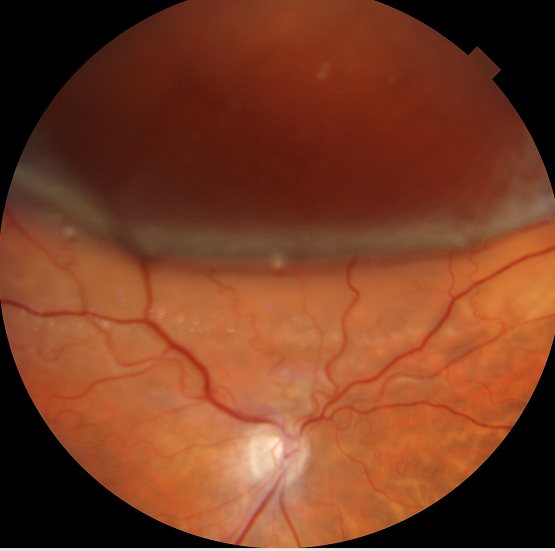
Some eye symptoms can wait for a routine appointment. This is not one of them. If you suddenly notice flashes of light, a shower of new floaters, or a dark shadow or curtain moving across your vision, treat it as an emergency and get your eyes examined the same day. These can be the warning signs of a retinal detachment — and with the retina, time is sight.
What a retinal detachment is
The retina is the light-sensitive layer lining the back of the eye. A retinal detachment happens when it begins to peel away from the wall of the eye, like wallpaper lifting off. Where the retina detaches, it stops working — which is why people describe a shadow or curtain spreading across part of their vision. Left untreated, a detachment can lead to permanent loss of sight in that eye. Treated in time, the outlook is far better.
The warning signs, in plain terms
- A sudden increase in floaters — specks, cobwebs or a “snowstorm” drifting across your vision
- Flashes of light, often at the edge of vision, like lightning or camera flashes
- A dark curtain, shadow or veil spreading across part of your sight
- A sudden drop or blur in vision in one eye
Not every flash or floater is a detachment — many are caused by harmless age-related changes in the eye's gel (a posterior vitreous detachment). But those same changes can also tear the retina, and there is no way to tell the difference without an examination. That is exactly why you should never wait and hope: a quick look settles it.
Why getting seen quickly matters so much
The single most important factor in how much vision is saved is whether the central part of the retina — the macula, responsible for your sharp, straight-ahead sight — is still attached when you are treated. An emergency examination is how that is caught in time. New Zealand research on macula-on detachments found that when the macula was still attached, prompt surgical repair achieved retinal reattachment in around 96% of eyes (Ehrlich et al., Retina, 2013). A review of the evidence likewise concludes that when the macula is still spared, standard practice is urgent surgery to protect it before it detaches — whereas once the macula is already involved, outcomes are similar whether surgery is within a day or within about a week (Mahmoudi & Almony, Journal of Ophthalmic & Vision Research, 2016). In plain language: getting examined fast, while your central vision is still intact, is what gives the best chance of keeping it.
What to do right now
During clinic hours: phone us straight away on (07) 847 3195. If your symptoms suggest you need to be seen, we will see you the same day. Our optometrists examine the retina with dilated, wide-field imaging, and if you have a tear or detachment we arrange urgent referral to an ophthalmologist for treatment — with your findings and images already prepared, so no time is lost.
After hours, or if your vision is being lost quickly: do not wait for morning — go straight to your nearest hospital emergency department or after-hours eye service. A retinal detachment is one of the few eye problems where hours can matter.
Better safe than sorry — always
If you are reading this because something has just changed in your vision, please don't finish the article and put it off. Most sudden flashes and floaters turn out to be harmless, but the only way to know is an examination — and if it is a detachment, acting today can protect the sight in that eye. Phone us on (07) 847 3195. We would far rather see you and reassure you than have you wait on something that couldn't.
This article is general information and not a substitute for urgent clinical care. If you have sudden flashes, floaters or a shadow over your vision, seek an eye examination the same day.
References
Sourced and verified via PubMed. Ehrlich R, Niederer RL, Ahmad N, Polkinghorne P. Timing of acute macula-on rhegmatogenous retinal detachment repair. Retina. 2013;33(1):105-10. PMID 22990323, DOI. Mahmoudi S, Almony A. Macula-Sparing Rhegmatogenous Retinal Detachment: Is Emergent Surgery Necessary? J Ophthalmic Vis Res. 2016;11(1):100-7. PMID 27195093, DOI.
What a detachment actually looks like
The photograph at the top of this article is a real retinal detachment from our clinic. The healthy attached retina is the orange field below; the dark billow descending from the top is detached retina, lifted off the eye wall like wallpaper off a damp wall, with its leading edge clearly visible. To this patient, that area of the world had become a shadow.
Frequently asked questions
What does a detached retina feel like?
Usually — nothing. Retinal detachment is painless; what it produces is visual: a burst of new floaters, flashes of light, then a shadow or curtain creeping across your vision. The absence of pain is exactly why people dangerously wait.
What causes retinal detachment?
Most begin when the ageing vitreous gel separates and tugs a tear in the retina; fluid then passes through the tear and peels the retina off the eye wall. Risk rises with short-sightedness, previous detachment or tears, family history, recent cataract surgery and significant eye trauma.
How long before a retinal detachment causes blindness?
Untreated, a detachment can take central vision within days — the timeline turns on the macula, the retina's central sweet spot. While it is still attached, urgent surgery can usually preserve central vision. Treat new flashes, floaters or a shadow as a same-day problem.
What is the treatment for a detached retina?
A tear caught before detachment is usually sealed with laser in minutes at the specialist's rooms. An established detachment needs surgery — vitrectomy, scleral buckle or gas bubble techniques, chosen by the retinal surgeon and arranged urgently.
Are eye floaters serious?
Long-standing, stable floaters are usually harmless. What matters is change: a sudden shower of new floaters, flashes, or any shadow needs a same-day dilated retinal examination, because that is how tears announce themselves while they are still sealable.



See things the Rose way
Make an appointment at Hamilton’s leading eye care specialists.

