Causes and Progression of Keratoconus
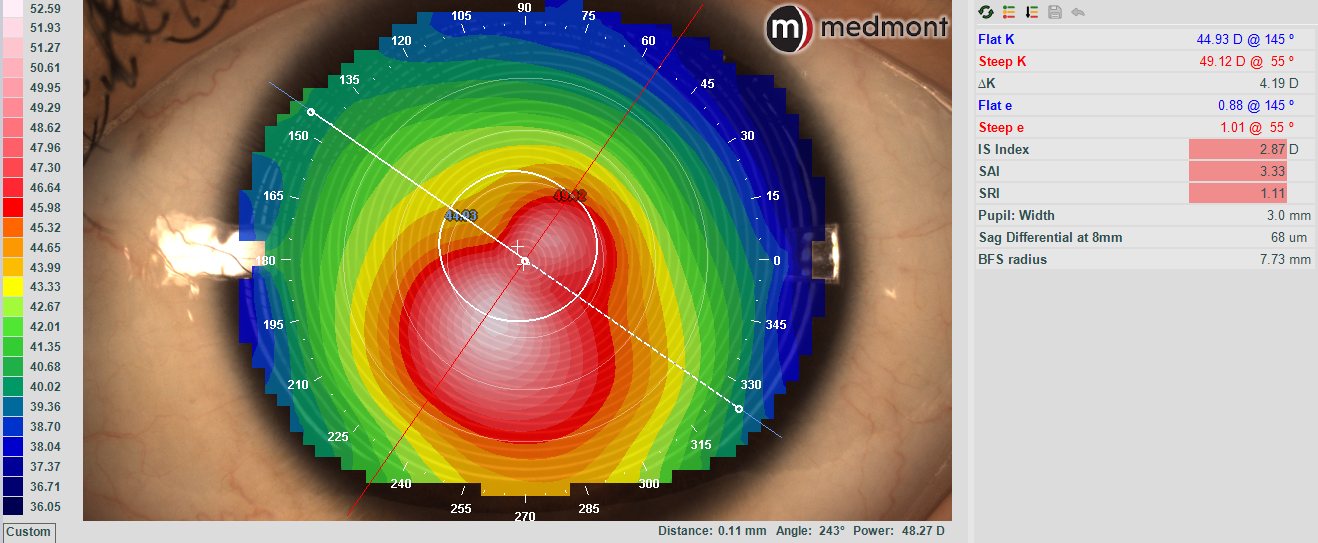
The exact cause of keratoconus is not fully understood, but it is generally accepted to be a combination of genetic predisposition and mechanical or biochemical factors that weaken the structural collagen of the cornea over time, allowing it to thin and steepen into a cone shape.
Genetics and family history
Keratoconus runs in families more often than chance would predict. In the largest meta-analysis to date (Hashemi et al., Cornea, 2020), having a first-degree relative with keratoconus was associated with more than six times the odds of having the condition yourself (odds ratio 6.42). Genetic research is active and ongoing, and while no single gene explains most cases, family history is one of the clearest risk signals we look for when assessing a new patient — which is why we ask about it at every keratoconus consultation.
Eye rubbing
Chronic, vigorous eye rubbing is one of the most consistent risk factors identified in the research, associated with roughly three times the odds of keratoconus (odds ratio 3.09, same meta-analysis). The mechanical stress from repeated rubbing is thought to accelerate corneal thinning in eyes that are already predisposed. This is why one of the simplest, most important things we ask keratoconus patients and their families to do is stop rubbing their eyes — and to treat any underlying itch (from allergy, hay fever or eczema) that is driving the rubbing in the first place, rather than just the symptom.
Allergy, asthma and eczema
Atopic conditions — allergy, asthma and eczema — are all independently associated with a higher risk of keratoconus in the same evidence (odds ratios of roughly 1.4 to 3.0). We think this connection runs partly through eye rubbing (itchy eyes get rubbed) and partly through the atopic conditions themselves, which is why managing your allergies well is part of managing your keratoconus risk.
How keratoconus progresses
Keratoconus typically first appears in the teenage years and progresses fastest through the teens and twenties, usually slowing (though not always stopping) by the mid-thirties to forties. Progression is not steady or predictable — this is exactly why we track the shape of your cornea with imaging at every visit, rather than relying on how your vision feels, since early changes can be detected on a topography map well before you notice any difference.
Have a family history of keratoconus, or notice yourself rubbing your eyes often? Book an assessment at Rose Optometry, Hamilton.
References
Hashemi H, Heydarian S, Hooshmand E, et al. The Prevalence and Risk Factors for Keratoconus: A Systematic Review and Meta-Analysis. Cornea. 2020;39(2):263-270. PMID: 31498247. (Eye rubbing OR 3.09; first-degree family history OR 6.42; allergy OR 1.42; asthma OR 1.94; eczema OR 2.95.)
This article is general information, not a substitute for a personalised assessment.
Recent articles
See things the Rose way
Make an appointment at Hamilton’s leading eye care specialists.

