Vision Standards for Becoming a Firefighter
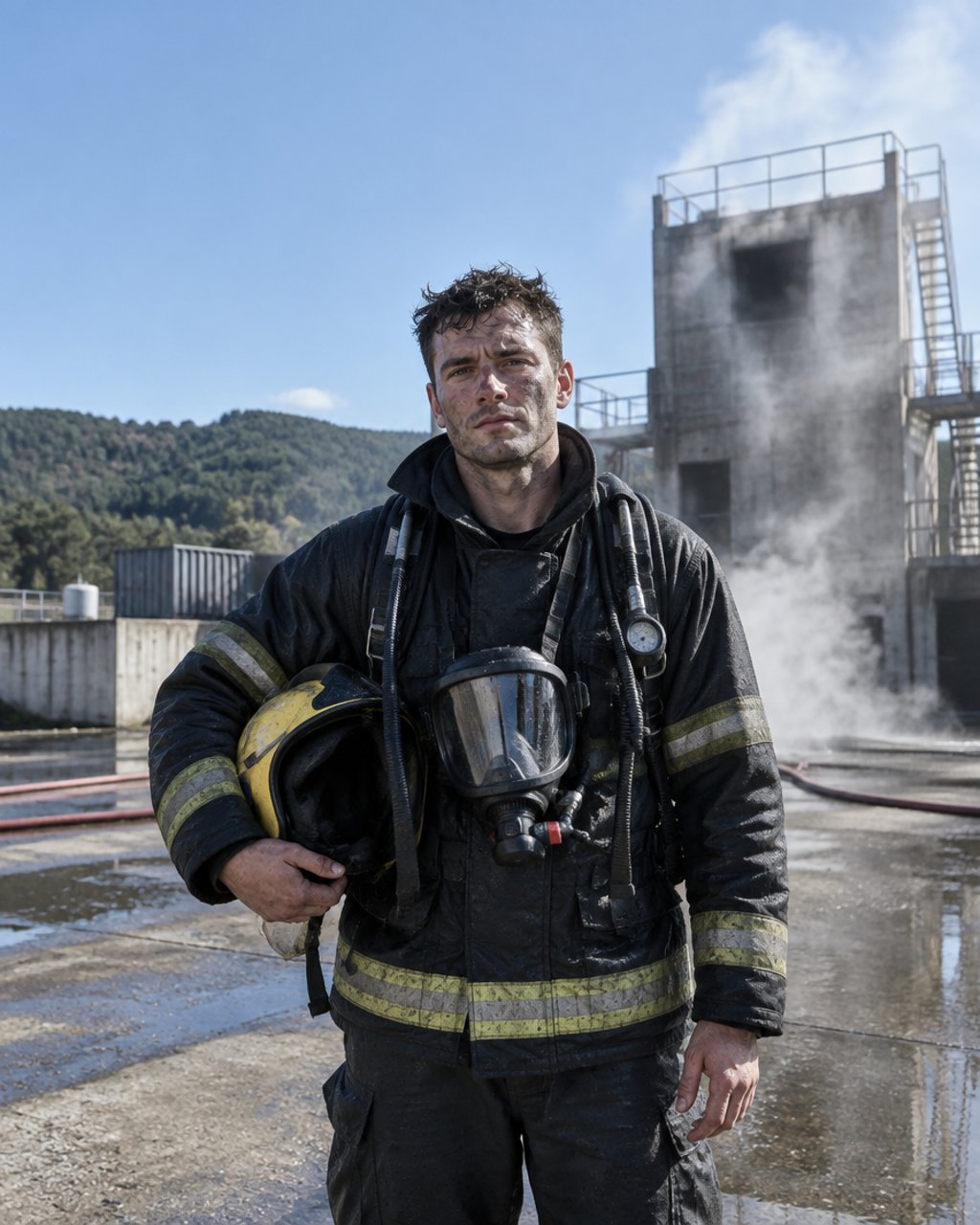
Fire and Emergency New Zealand's eyesight requirement for career firefighters is unusual among New Zealand services, and it is the reason this question comes up so often: glasses cannot be worn. Not 'are discouraged' — cannot be worn.
The reason is equipment rather than eyesight. Breathing apparatus has to seal against the face, and spectacle arms break that seal. In a structure fire that is not a comfort issue.
What the standard says
Fire and Emergency's published entry requirements list poor vision as a condition that may affect eligibility, and state that distance visual acuity needs to meet 6/12 unaided, or with contact lenses, and that glasses cannot be worn.
Two things follow. First, 6/12 is a more forgiving threshold than the Police standard — plenty of mildly short-sighted people meet it without any correction at all, and it is worth actually measuring rather than assuming. Second, if you do not meet it unaided, contact lenses are explicitly an accepted route.
The published requirements do not set out a colour vision standard or a visual field standard in the same detail, and the full medical assessment covers more than eyesight. Check the current entry requirements on the Fire and Emergency website, and treat this page as an explanation rather than as the authority.
The part we will not soften
Night lenses temporarily reshape the cornea. That means the vision measured on you during the day is, technically, unaided — but it is unaided because of a lens you wore last night, and it fades if you stop wearing them. Any recruiting body's vision standard exists to describe your eyes, not your lens schedule.
So our position is simple and we do not negotiate on it. If you wear night lenses, you declare them — to the examiner, on the form, and to the recruiter. We will write it on any report we complete. Whether the standard is then met is the recruiting body's decision to make with full information, not something to be arrived at by omission. Being found out later, after training has started, is a far worse outcome than being told no at the start.
We will fit night lenses for someone applying to any of these services, and we think they are an excellent option for the job itself. We will not fit them as a way of getting a measurement past an assessor.
Where night lenses fit
Night lenses — orthokeratology — are rigid lenses worn overnight that reshape the cornea, so you see clearly through the day with nothing in your eyes at all. For firefighting specifically they line up well with the job:
- Nothing between your face and the BA mask seal — no spectacle arms, and unlike day lenses, nothing in the eye to dry out in heat.
- Heat, smoke and dry air are where soft contact lenses are least comfortable and most likely to be rubbed out. A night lens is not in your eye at the time.
- Nothing to lose or handle mid-incident, with gloves on and dirty hands.
- Full peripheral vision under a helmet and a mask.
- Volunteer brigades — the same logic applies, and a call-out at 3am is exactly when nobody wants to be finding a lens case.
Practical advice for applicants
- Measure your unaided acuity first. A surprising number of people who wear glasses for driving already meet 6/12 unaided.
- If you use contact lenses, have a plan for dry, hot and smoky conditions and a spare pair available. Daily disposables are the sensible choice.
- Get colour vision tested anyway. It is part of a proper occupational assessment and you would rather know.
- If you are considering laser surgery, get an accurate picture of your own eyes first and be clear about the stand-down period before a medical.
What we would do first
Book a comprehensive eye examination and say at the booking what you are applying for. We will measure your unaided and corrected acuity properly, test colour vision with the 24-plate Ishihara and follow up with Farnsworth D15 where needed, screen your visual fields, and tell you plainly whether you currently meet the published standard, whether you could with a change of correction, and whether you could not. Knowing that before you start an application is worth a great deal more than finding out during it.
A comprehensive examination is $129 for adults and takes 45 minutes for new patients, including full pretest and imaging. Visual fields, where they are needed, are $69.
Related: joining the New Zealand Police, prescription safety glasses, orthokeratology.
Optometrists for vision standards and specialty lens fitting at Rose Optometry
You will be seen by one of seven therapeutically qualified optometrists — all University of Auckland graduates, all able to prescribe eye medication where it is needed, and all of whom examine patients from six weeks of age. Vision standards and specialty lens fitting is part of their clinical practice.
- Jagrut Lallu — Partner Optometrist · BOptom (Hons), MSc Specialty Lenses (Hons), FIAOMC
- Jacqueline Rowe — Partner Optometrist · BSc, BOptom
- Emilie Lawson — BOptom (Hons) · Accredited Glaucoma Prescriber · ACO Certificate in Advanced Contact Lenses
- Jason Shen — BOptom (Hons)
- Jessica Wood — BOptom (Hons) · Clinical Research Optometrist, New Zealand Eye Research Centre
- Stella Wong — BOptom (Hons)
- Anjali Hira — BOptom (Hons)
Book an assessment
Tell us at the booking which service you are applying for so we set aside the right amount of time.
- New patient — book a comprehensive eye examination (45 minutes, includes imaging and full pretest), $129 for adults, $79 for children and school students.
- Already a Rose patient — book your eye examination here.
- Want to talk about night lenses first? — book a free 15-minute Ortho-K chat, no cost and no obligation.
- Ready to be fitted — new ortho-k / night lens fit (30 minutes).
Or call 07 847 3195, or get in touch. Rose Optometry, 38 Lake Road, Frankton, Hamilton. 07 847 3195
Reviewed by Jagrut Lallu — BOptom (Hons), MSc Specialty Lenses (Hons), FIAOMC, Therapeutic Optometrist & Contact Lens Specialist, Partner, Rose Optometry. Last reviewed 19 September 2026.
Recent articles

See things the Rose way
Make an appointment at Hamilton’s leading eye care specialists.

