Night Lenses for Netball & Basketball
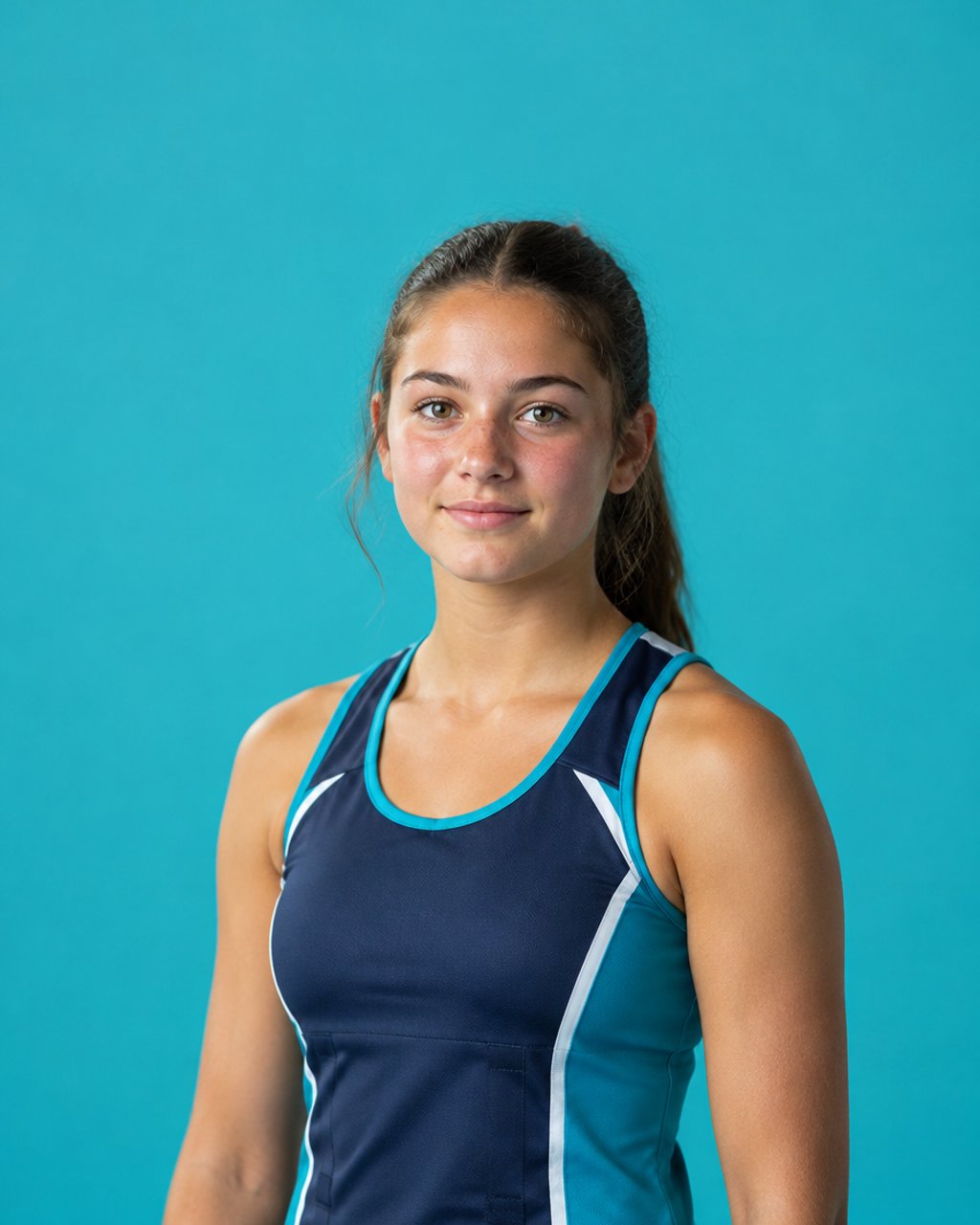
Court sport is played almost entirely in peripheral vision — the pass you take is rarely the one you were looking at. That makes a spectacle frame a genuine handicap rather than just an inconvenience, and in most competitions glasses are restricted for safety anyway. Day lenses work, but an indoor court is dry, hands are busy, and a lens that shifts or falls out at the wrong moment costs a possession at best.
What night lenses are
Night lenses — also called orthokeratology, ortho-k or overnight contact lenses — are rigid lenses worn only while you sleep. They gently reshape the front surface of the cornea overnight. You take them out in the morning and see clearly through the day with nothing in your eyes and nothing on your face. Nothing is cut and nothing is permanent: stop wearing them and the cornea returns to its own shape over days to a couple of weeks. Full detail, including cost and the safety rules, is on our orthokeratology page.
Why they suit netball and basketball
Night lenses give a court player the thing that matters most: an uninterrupted field of view with nothing in it.
- No frame edge anywhere in your peripheral field.
- Nothing to shift or fall out on a rebound, a contest or a hard landing.
- No drying out in an air-conditioned or heated indoor stadium, which is where day lens wearers struggle most.
- Nothing to handle courtside with sweaty hands mid-game.
- Nothing in the eye if you take a finger or an elbow — which in netball and basketball is not a rare event.
What to expect
The fitting starts with corneal topography — a map of the surface of your eye — because the lens is designed from that map rather than from a guess. You wear trial lenses overnight and come in the next morning, ideally with the lenses still in, so we can see exactly how they sat. Vision usually improves over the first few nights and settles within one to two weeks, which is why we suggest starting in the off-season or well before a tournament rather than the week of it.
If you take a finger to the eye — common in both codes — get it looked at the same day if it stays sore, waters, or vision is affected. A corneal abrasion heals quickly but needs to be kept clean, and you should not put a night lens back in until an eye that has been injured has been checked.
Cost
Two parts: the fitting and care programme ($1,100 for both eyes as a standard fit, $1,350 where a custom design is needed, $1,000 for a single eye) and the lenses themselves, currently $450 per lens and rising to $600. A standard both-eyes fit today is therefore $2,000. Lenses carry a six-month breakage warranty, extendable to twelve months with loss cover for $50 per lens — which most sporting families take. Lenses are usually replaced about once a year. The full breakdown, including the price rise, is on the orthokeratology page.
School and club juniors. A young player whose prescription has climbed each season is a candidate for myopia management as well as for clearer court vision, and night lenses are one of the evidence-based options for slowing progression. Axial length is measured at every review. See myopia control, or book the free 15-minute myopia chat.
The water rule, which we do not bend. Night lenses are never rinsed or stored in tap water, tank water, bottled water, pool water or river water — only in the solution we prescribe — and they are out of the eyes before swimming, showering and spa pools. Acanthamoeba, the organism behind the most feared contact lens infection, lives in all of those. Our partner optometrist Jagrut Lallu is a co-author on a published case report of orthokeratology-related Acanthamoeba keratitis in a 13-year-old, so we would rather tell you about it plainly at the start than not at all. Nearly all of that risk is preventable with habits we can teach in a single appointment.
Is it right for you?
Night lenses work well for short-sightedness with up to a moderate amount of astigmatism. They are not for everyone: high prescriptions can sit outside the fitting range, significant irregular astigmatism is usually better served by a different specialty lens, active dry eye or lid disease needs treating first, and the nightly hygiene routine is not optional. We tell you which group you are in after the topography, not before it — and if a different option would serve you better, we will say so.
Related: night lenses for sport, football.
Optometrists for night lenses for netball and basketball at Rose Optometry
You will be seen by one of seven therapeutically qualified optometrists — all University of Auckland graduates, all able to prescribe eye medication where it is needed, and all of whom examine patients from six weeks of age. Night lenses for netball and basketball is part of their clinical practice.
- Jagrut Lallu — Partner Optometrist · BOptom (Hons), MSc Specialty Lenses (Hons), FIAOMC
- Jacqueline Rowe — Partner Optometrist · BSc, BOptom
- Emilie Lawson — BOptom (Hons) · Accredited Glaucoma Prescriber · ACO Certificate in Advanced Contact Lenses
- Jason Shen — BOptom (Hons)
- Jessica Wood — BOptom (Hons) · Clinical Research Optometrist, New Zealand Eye Research Centre
- Stella Wong — BOptom (Hons)
- Anjali Hira — BOptom (Hons)
Book a free night lens chat
The quickest way to find out whether night lenses suit your eyes and your sport is a free 15-minute chat. No cost, no obligation.
- New patient — book a comprehensive eye examination (45 minutes, includes imaging and full pretest), $129 for adults, $79 for children and school students.
- Already a Rose patient — book your eye examination here.
- Want to talk about night lenses first? — book a free 15-minute Ortho-K chat, no cost and no obligation.
- Ready to be fitted — new ortho-k / night lens fit (30 minutes).
Or call 07 847 3195, or get in touch. Rose Optometry, 38 Lake Road, Frankton, Hamilton. 07 847 3195
Reviewed by Jagrut Lallu — BOptom (Hons), MSc Specialty Lenses (Hons), FIAOMC, Therapeutic Optometrist & Contact Lens Specialist, Partner, Rose Optometry. Last reviewed 19 September 2026.
Recent articles


See things the Rose way
Make an appointment at Hamilton’s leading eye care specialists.

