What is a therapeutically qualified optometrist?
Short answer: A therapeutically qualified optometrist in New Zealand is registered in the full Optometrist scope with the Optometrists and Dispensing Opticians Board (ODOB), which means they can prescribe medicines for eye conditions such as infections, inflammation, allergy and dry eye, rather than only testing vision for glasses. Every optometrist at Rose Optometry is therapeutically qualified, and the team examines children from six weeks of age.
What can a therapeutically qualified optometrist treat?
The common reasons people come to us rather than waiting for a GP appointment: red or sore eyes, eye infections, allergic eye disease, dry eye and blepharitis, scratches and foreign bodies, and inflammation inside the eye that needs prompt treatment and monitoring. Where surgery or specialist care is needed we refer, and ophthalmologists consult on site at our Lake Road clinic in Frankton, Hamilton.
How do I check an optometrist's scope?
Search their name on the ODOB public register. "Optometrist" scope means they can prescribe therapeutic medicines; "Provisional Optometrist" means they work under supervision and cannot prescribe them yet while they complete accredited training.
Optometrist or ophthalmologist: who should I see?
Start with an optometrist for eye examinations, glasses and contact lenses, and for most red, sore or dry eyes. You need an ophthalmologist (a medical eye surgeon) for surgery such as cataract, laser or retinal procedures, and for some complex disease. A good optometrist tells you when you have reached that point.
When is it urgent?
A curtain or shadow across your vision, or strong light sensitivity, needs a same-day eye examination. Sudden loss of vision means going to the hospital emergency department.
Children's eye examinations from six weeks of age
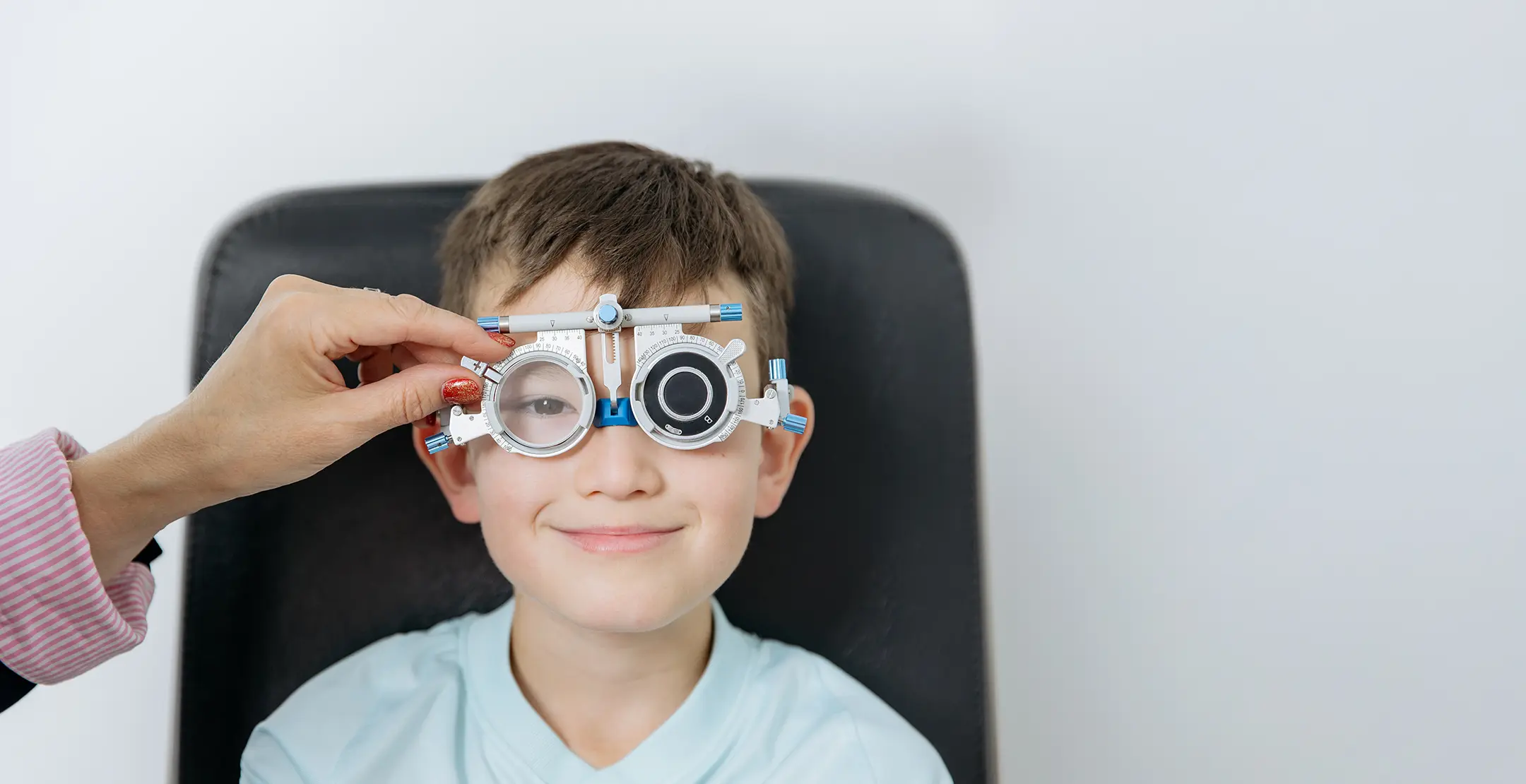
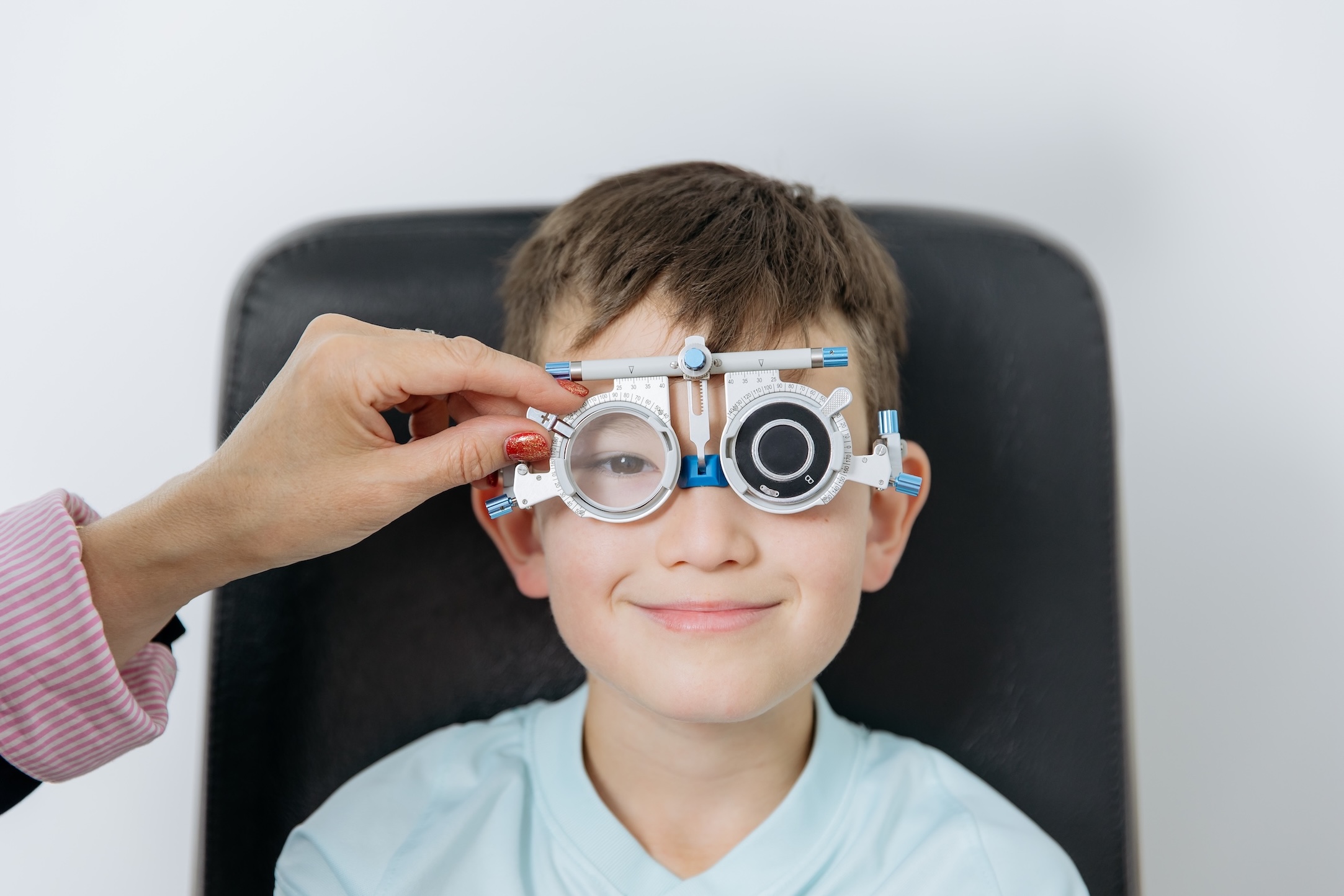
Rose Optometry examines babies and children from six weeks of age, and no referral is needed. A large long-sighted prescription, an eye turn or a difference between the two eyes is best found early, and babies and toddlers don't need to read a chart: we use Cardiff Acuity Cards, picture-based tests that measure vision without a spoken answer. See our children's eye care page and how to choose a children's optometrist in Hamilton.
Therapeutically qualified optometrists at Rose Optometry
All of Rose Optometry's optometrists are University of Auckland graduates and therapeutically qualified: Jagrut Lallu, Jacqueline Rowe, Emilie Lawson, Jason Shen and Stella Wong. Between them, the team's clinical practice covers glaucoma, dry eye, keratoconus and specialty contact lenses, orthokeratology, children's vision and myopia management, and binocular vision.
The equipment behind a Rose examination
A prescription is only as good as what the optometrist can see. Rose Optometry shares its Lake Road clinic in Frankton, Hamilton, with the New Zealand Eye Research Centre, so patients are examined on research-grade equipment.
Imaging and diagnostics
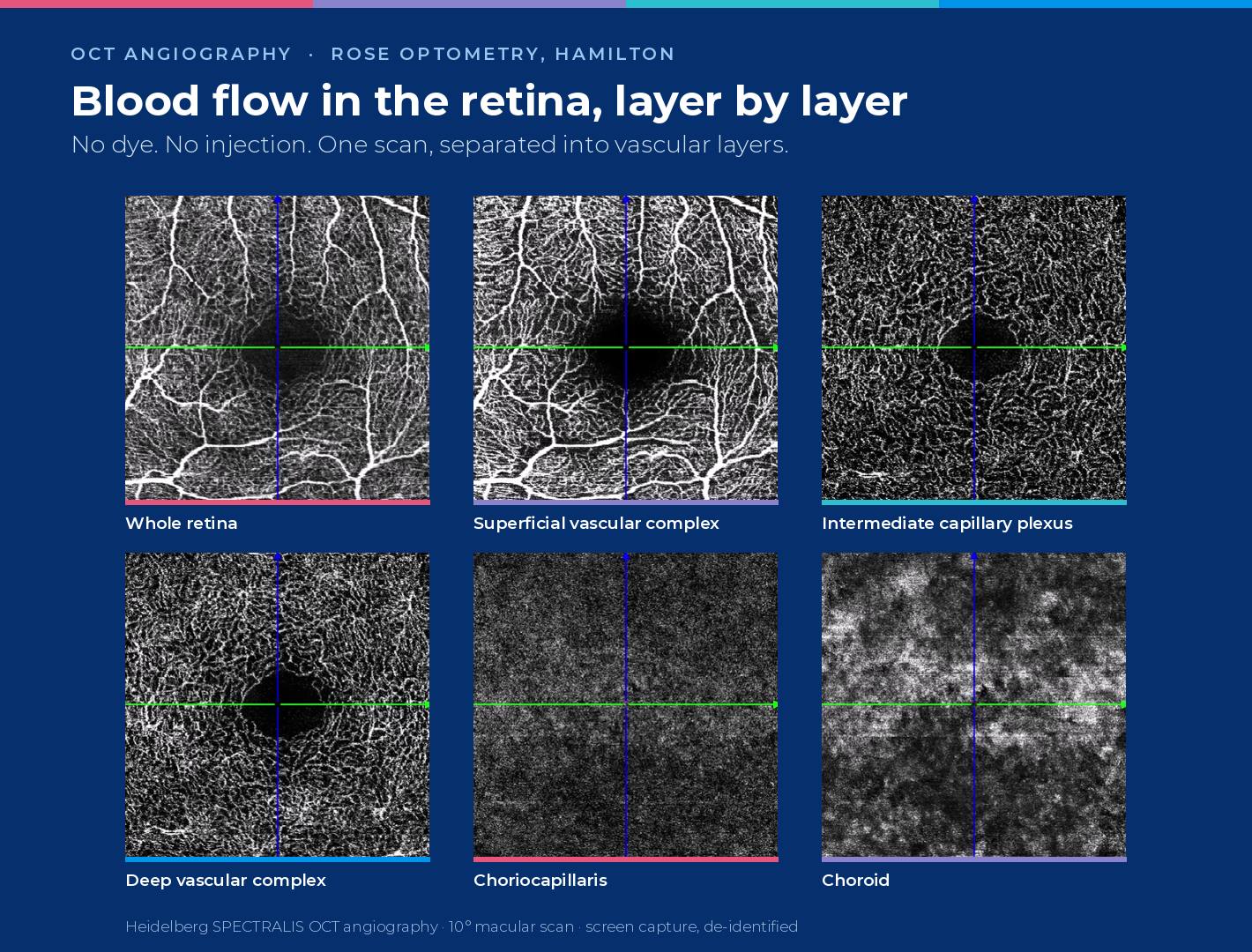
- Heidelberg Spectralis OCT, with every option fitted: Nsite Analytics (nerve fibre and ganglion cell layer analysis), BluePeak blue-laser autofluorescence, scanning laser angiography, and Heidelberg AppWay with NMI-ChoroidAI for automated choroid measurement in myopia care
- Heidelberg ANTERION swept-source OCT of the front of the eye: corneal tomography, pachymetry, epithelial thickness mapping, biometry and keratoconus risk scoring
- Three optical biometers to measure eye length for myopia control: ZEISS IOLMaster, NIDEK AL-Scan and Lenstar
- Medmont Meridia and E300 corneal topographers, including meibomian gland imaging
- TOMEY EM-4000 specular microscope for corneal endothelial cells
- TOPCON NW500 retinal camera
- ZEISS Humphrey Field Analyzer and Humphrey Matrix visual fields
- iCare tonometer (no air puff, no drops) and NIDEK TONOREF
- TearCheck (E-SWIN) and Trukera ScoutPro tear osmolarity for dry eye
- Cardiff Acuity Cards for babies and toddlers, and GOOD-LITE ETDRS charts
Treatment
- Dry eye: E-Eye IPL, LipiFlow, Rexon-Eye, LED Pro low-level light therapy, Théa Blephasteam and BlephEx, plus Tixel 2 with Jagrut Lallu
- Macular degeneration: photobiomodulation light therapy (Valeda and LED Pro) with Jagrut Lallu
- Myopia control: orthokeratology, Eyerising red-light therapy, MiSight 1 day, MiYOSMART and Stellest
- Amniotic membrane treatment for the damaged ocular surface
- Coming soon: a Photon Therapeutics UVC device for treating corneal infections. Rose will be the first practice in New Zealand to have one.
To our knowledge, no other optometry or ophthalmology practice in New Zealand has Rexon-Eye, E-Eye IPL, low-level light therapy, Tixel 2, LipiFlow, TearCheck and Blephasteam together under one roof. See the full list on our technology page.
Book with the team
Book an eye examination with the Rose Optometry team in Frankton, Hamilton or Huntly. Lens care and dry eye products are on store.roseoptom.co.nz. Choosing an optometrist more generally? Read the New Zealand checklist on optometrists.nz.
Common questions
Can an optometrist prescribe eye drops in New Zealand?
Yes, if they are registered in the full Optometrist scope with the ODOB.
Are all New Zealand optometrists therapeutically qualified?
No. Optometrists in the Provisional scope cannot prescribe therapeutic medicines until they complete accredited training.
Can an optometrist treat glaucoma?
Optometrists diagnose and monitor glaucoma; those with the ODOB Independent Glaucoma Prescriber endorsement can also manage treatment.
From what age does Rose Optometry examine children?
From six weeks of age. No referral is needed.
Sources: ODOB, Search the Register and Scopes of Practice; ODOB Registration Policy (Independent Glaucoma Prescriber endorsement); ODOB Glaucoma Collaborative Care guidelines (2019). Last reviewed November 2026.
Recent articles
See things the Rose way
Make an appointment at Hamilton’s leading eye care specialists.

