What Is Myopia? Can It Be Cured, and What Slows It in Children
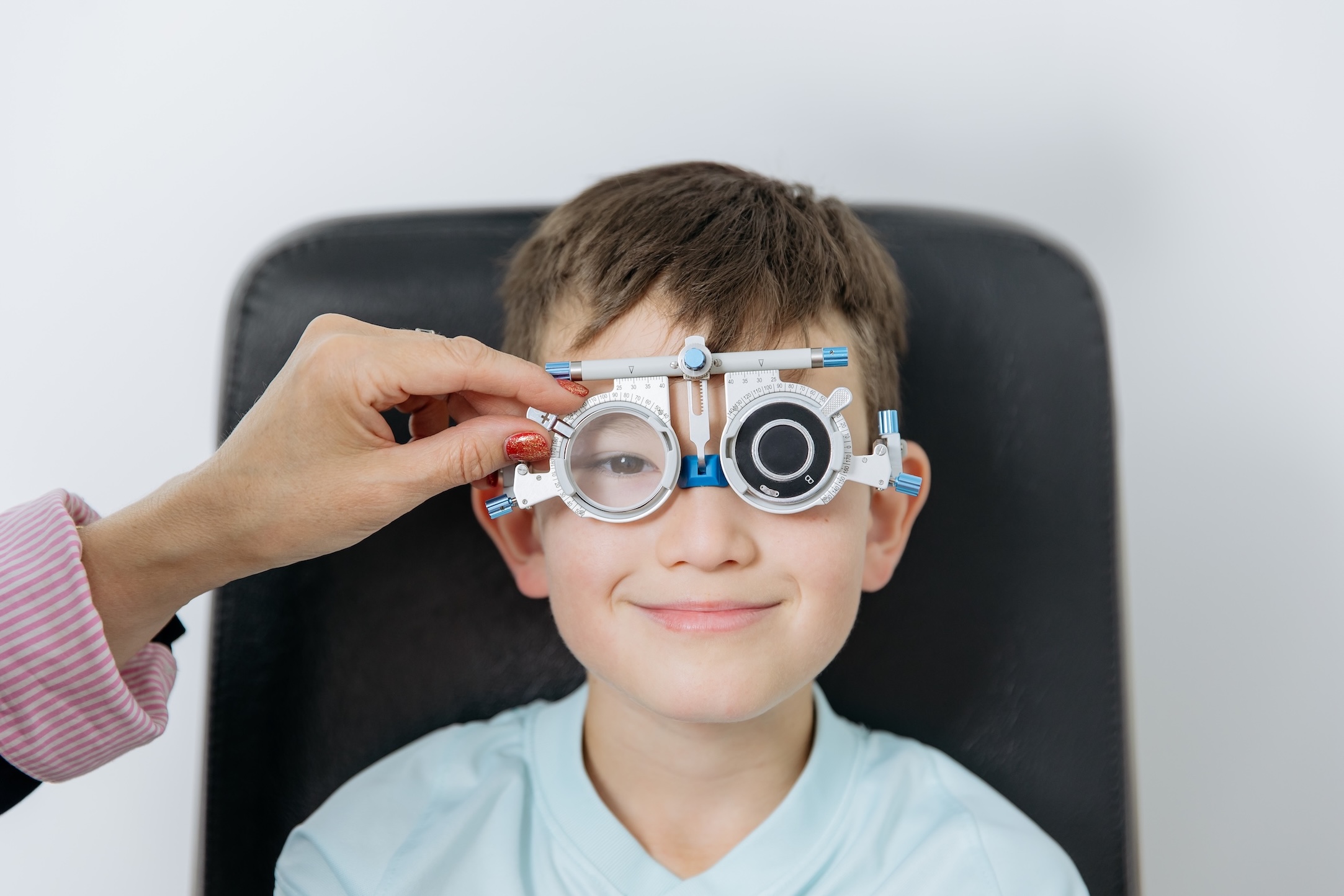
Myopia (short-sightedness) means distant things look blurry because the eye has grown slightly too long for its focusing power. It cannot currently be cured or reversed. Glasses, contact lenses and laser surgery correct the blur, and in children, treatments such as low-dose atropine, myopia-control lenses and ortho-K may slow how fast it gets worse.
This guide is written by the optometrist team at Rose Optometry in Hamilton for parents who have just been told their child is short-sighted, and for adults wondering whether anything can be done.
What is myopia?
In a short-sighted eye, light from distant objects focuses in front of the retina instead of on it. Near vision is usually clear; the board at school, road signs and the TV are not.
The International Myopia Institute defines myopia as a prescription of −0.50 dioptres (D) or more, and high myopia as −6.00 D or more (Flitcroft 2019). Most childhood myopia happens because the eyeball grows too long, which is why it tends to increase while a child is still growing.
It is common and becoming more so. A global analysis estimated that 22.9% of the world's population was myopic in 2000, and projected 49.8%, about half, by 2050 (Holden 2016).
What is the main cause of myopia?
The causes are complex: researchers describe an interaction of retinal, optical and environmental factors (Flitcroft 2012). Time outdoors is one environmental factor that appears to matter: in a 3-year trial in Guangzhou, adding 40 minutes of outdoor activity to each school day lowered the number of 6-year-olds who became myopic from 39.5% to 30.4% (He 2015). That trial was about preventing myopia starting, not slowing it once present.
Can myopia be cured or reversed?
No. There is currently no treatment that shortens an eye that has grown too long. Myopia treatments in children aim to slow progression, and the International Myopia Institute notes that no one treatment works fully for every child (Wildsoet 2019).
Laser eye surgery in adults changes the shape of the front of the eye so you can see clearly without glasses. It does not shorten the eye. A study of people who had a retinal detachment found that eyes treated with laser surgery were just as long as untreated myopic eyes, and the authors concluded that myopia itself, not the surgery, was the likely risk factor (Kang 2014).
Is myopia very serious?
Mild myopia is easily corrected and most people live with it without problems. The concern is long-term. A longer eye has a higher lifetime risk of retinal detachment, glaucoma and myopic maculopathy (damage to the central retina). One review found that the risks rise even in low and moderate myopia, not only in high myopia (Flitcroft 2012).
That is why each dioptre matters. Researchers have estimated that slowing myopia by 1 dioptre may reduce the likelihood of myopic maculopathy by about 40% (Bullimore 2019; one author works for a contact lens manufacturer).
What slows myopia in children?
These are the main evidence-based options. Results come from clinical trials and vary from child to child.
- Low-dose atropine eye drops (one drop at night, prescribed and monitored): over 1 year, prescription change was −0.27 D with 0.05% atropine versus −0.81 D with placebo (Yam 2019).
- Myopia-control spectacle lenses (DIMS design, e.g. MiYOSMART, worn like ordinary glasses): over 2 years, myopia progressed 52% more slowly than with standard lenses (Lam 2020).
- Myopia-control soft contact lenses (e.g. MiSight 1 day, daily disposables worn during the day): over 3 years, prescription change was 59% less than with a standard lens (Chamberlain 2019).
- Orthokeratology (ortho-K) (rigid lenses worn overnight, clear vision by day): over 2 years, eye growth was 43% slower than with glasses (Cho 2012).
- Time outdoors: may reduce the chance of myopia starting (He 2015).
Each option has trade-offs. Stronger atropine can cause larger pupils and more difficulty focusing up close (Yam 2019). Overnight contact lenses carry a small risk of eye infection: one estimate for children was 13.9 cases per 10,000 patient-years (Bullimore 2013), which is why careful lens care and regular check-ups matter. Several of these trials were run in East Asian children, and some had manufacturer involvement.
For a full breakdown of the options we offer, read Myopia Control for Children in Hamilton, and for overnight lenses see our ortho-K service page.
How do I know if my child's myopia is getting worse?
- Watch for squinting at distance, sitting close to the TV, or headaches after school.
- Book an eye examination at least once a year once myopia is found, or as advised.
- Ask whether your child's eye length (axial length) is being measured. Myopia trials use it, alongside the prescription, to track how fast the eye is growing.
- Bring old prescriptions so changes over time can be compared.
When should a short-sighted child see an optometrist?
As soon as myopia is suspected, or if a short-sighted child's prescription has changed since their last check. Treatments to slow myopia are designed for children whose eyes are still growing.
At Rose Optometry, the optometrist team measures your child's prescription and eye length and explains which options suit their age, lifestyle and eyes. You can start with a free 15-minute Myopia Free Chat: book a Myopia Free Chat. If your child is over 6 and keen to be free of glasses during the day, you can instead book a Shift (ortho-K) Free Chat. Or call 07 847 3195.
Rose Optometry works alongside the New Zealand Eye Research Centre in Hamilton. Families using ortho-K can find lens-care solutions in our ortho-K and RGP lens care range.
See an optometrist urgently if a short-sighted person notices sudden flashes of light, a shower of new floaters or a shadow across their vision.
Last reviewed 9 November 2026 by the Rose Optometry optometrist team (Jagrut Lallu, Jacqueline Rowe and colleagues), 38 Lake Road, Frankton, Hamilton.
References
- Flitcroft DI, et al. IMI – Defining and Classifying Myopia: a proposed set of standards for clinical and epidemiologic studies. Invest Ophthalmol Vis Sci. 2019;60(3):M20-M30. PMID 30817826. doi:10.1167/iovs.18-25957
- Holden BA, et al. Global prevalence of myopia and high myopia and temporal trends from 2000 through 2050. Ophthalmology. 2016;123(5):1036-42. PMID 26875007. doi:10.1016/j.ophtha.2016.01.006
- He M, et al. Effect of time spent outdoors at school on the development of myopia among children in China. JAMA. 2015;314(11):1142-8. PMID 26372583. doi:10.1001/jama.2015.10803
- Wildsoet CF, et al. IMI – Interventions for Controlling Myopia Onset and Progression Report. Invest Ophthalmol Vis Sci. 2019;60(3):M106-M131. PMID 30817829. doi:10.1167/iovs.18-25958
- Kang HM, et al. Characteristics of rhegmatogenous retinal detachment after refractive surgery: comparison with myopic eyes with retinal detachment. Am J Ophthalmol. 2014;157(3):666-72. PMID 24321470. doi:10.1016/j.ajo.2013.12.004
- Flitcroft DI. The complex interactions of retinal, optical and environmental factors in myopia aetiology. Prog Retin Eye Res. 2012;31(6):622-60. PMID 22772022. doi:10.1016/j.preteyeres.2012.06.004
- Bullimore MA, Brennan NA. Myopia control: why each diopter matters. Optom Vis Sci. 2019;96(6):463-465. PMID 31116165. doi:10.1097/OPX.0000000000001367
- Yam JC, et al. Low-Concentration Atropine for Myopia Progression (LAMP) Study: a randomized, double-blinded, placebo-controlled trial of 0.05%, 0.025%, and 0.01% atropine eye drops in myopia control. Ophthalmology. 2019;126(1):113-124. PMID 30514630. doi:10.1016/j.ophtha.2018.05.029
- Lam CSY, et al. Defocus Incorporated Multiple Segments (DIMS) spectacle lenses slow myopia progression: a 2-year randomised clinical trial. Br J Ophthalmol. 2020;104(3):363-368. PMID 31142465. doi:10.1136/bjophthalmol-2018-313739
- Chamberlain P, et al. A 3-year randomized clinical trial of MiSight lenses for myopia control. Optom Vis Sci. 2019;96(8):556-567. PMID 31343513. doi:10.1097/OPX.0000000000001410
- Cho P, Cheung SW. Retardation of myopia in Orthokeratology (ROMIO) study: a 2-year randomized clinical trial. Invest Ophthalmol Vis Sci. 2012;53(11):7077-85. PMID 22969068. doi:10.1167/iovs.12-10565
- Bullimore MA, Sinnott LT, Jones-Jordan LA. The risk of microbial keratitis with overnight corneal reshaping lenses. Optom Vis Sci. 2013;90(9):937-44. PMID 23892491. doi:10.1097/OPX.0b013e31829cac92
Recent articles
See things the Rose way
Make an appointment at Hamilton’s leading eye care specialists.

