Can Keratoconus Be Cured? What Stops It Getting Worse, and How Vision Is Improved
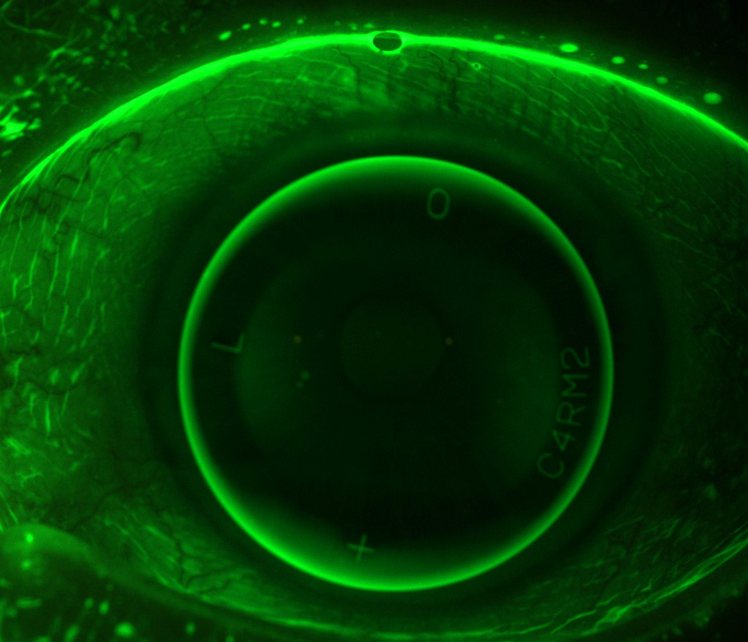
Keratoconus cannot currently be cured, but it can usually be slowed or stopped, and vision can usually be improved. Corneal cross-linking halts or slows progression in most treated eyes, and specialty contact lenses such as scleral or rigid lenses can give much clearer vision for most people. A corneal transplant is now a last resort.
This guide is written by the optometrist team at Rose Optometry in Hamilton, including Jagrut Lallu and Jacqueline Rowe. We diagnose and monitor keratoconus with corneal topography, fit specialty lenses in practice, and refer to corneal surgeons for cross-linking when the cornea is changing.
What is keratoconus?
Keratoconus is a condition where the clear front window of the eye, the cornea, thins and bulges into a cone shape. The irregular shape blurs and distorts vision, and glasses stop giving sharp sight. It is usually diagnosed between the teens and the thirties. In a Dutch study of 4.4 million people, the average age at diagnosis was 28.3 years, and the estimated prevalence was 1 in 375 people, far higher than older figures [1].
It matters a lot in Aotearoa. A nationwide New Zealand study found 1,869 people with keratoconus seen by optometrists in two years, and 21.3% of them were in the Waikato. Māori and Pacific peoples were over-represented and tended to have more advanced disease [2].
Can keratoconus be cured?
Not yet. No treatment returns the cornea to a normal shape. What modern care does is split the problem into two parts, and each part has a good answer:
| Goal | Main option | What it does | What it does not do |
|---|---|---|---|
| Stop it getting worse | Corneal cross-linking (CXL) | Stiffens the cornea; halts or slows progression in most eyes [3, 4] | Does not restore normal vision; most people still need lenses |
| See clearly | Scleral or rigid contact lenses | Mask the irregular cornea; large gains in sharpness [6] | Do not stop the disease progressing |
| Last resort | Corneal transplant | Replaces scarred or very thin cornea | Needed less often than in the past [5, 6] |
What can stop keratoconus getting worse?
Corneal cross-linking is the treatment shown in trials to slow or stop progression. Riboflavin (vitamin B2) drops are applied to the cornea and activated with ultraviolet light, which strengthens the links between its collagen fibres. It is done by an ophthalmologist; our role is to detect change early and refer.
In an Australian randomised trial, untreated eyes kept steepening (by 1.75 dioptres on average at three years), while treated eyes flattened slightly (by 1.03 dioptres) [3]. In a US trial of 205 patients, treated corneas flattened by 1.6 dioptres at one year while untreated eyes continued to progress. A small minority still progressed after treatment: 5 eyes (5.6%) steepened by 2 dioptres or more [4]. A Cochrane review in 2015 judged the trial evidence to be of very low quality but noted the potential effect was large [7]. Corneal haze is the most common side effect [4]; side effects are mostly temporary [7].
Not rubbing your eyes matters too. A large review found eye rubbing was linked with about three times the odds of keratoconus, and a family history with about six times [8]. That is an association rather than proof of cause, but we advise every patient with keratoconus to stop rubbing, and to treat itchy, allergic eyes so the urge to rub settles.
How can vision be improved with keratoconus?
For most people, the answer is a specialty contact lens. A rigid lens creates a smooth new front surface over the irregular cornea, and the tear layer under it fills in the distortion. In the New Zealand study, 64.3% of eyes were managed with rigid contact lenses [2].
Scleral lenses are larger rigid lenses that vault over the cornea and rest on the white of the eye. In a Belgian clinic, 40 of 51 eyes with severe keratoconus that would otherwise have gone to transplant were successfully managed with long-term scleral lens wear [6]. We explain who they suit, and the downsides, in our guide to scleral lenses in Hamilton.
Does keratoconus progress in children and teenagers?
Often, yes. In a Swiss study of children and teenagers aged 9 to 19, 88% of eyes showed progression, and the authors recommended treating as soon as keratoconus is diagnosed [9]. That is why we bring younger patients back for repeat topography, so any change is caught early and referred for cross-linking.
Will I need a corneal transplant?
Most people will not. Historically, about 10 to 20% of people with keratoconus eventually needed a transplant [5]. After cross-linking was introduced across the Netherlands, about 25% fewer transplants were done for keratoconus in people under 50 [5]. Specialty lenses keep many people with advanced disease seeing well without surgery [6].
Can I live a normal life with keratoconus?
For most people, yes. In our experience, once progression is controlled and lenses fit well, most patients work, drive and study as usual. The key is regular monitoring, especially while you are young, a good lens care routine, and care from a practice that fits specialty lenses regularly. Our store stocks the scleral and specialty lens care products our patients use, and you can read more at Keratoconus New Zealand (kcnz.co.nz).
Keratoconus care in Hamilton
If you have been told you have keratoconus, your glasses keep changing, or your vision is distorted even with a new prescription, book a keratoconus appointment with our optometrist team at 38 Lake Road, Frankton, or call 07 847 3195. See our keratoconus service for what the visit includes.
Last reviewed 25 November 2026 by the Rose Optometry optometrist team.
References
- Godefrooij DA, et al. Age-specific incidence and prevalence of keratoconus: a nationwide registration study. Am J Ophthalmol. 2017. PMID 28039037. doi:10.1016/j.ajo.2016.12.015
- Gokul A, et al. The Aotearoa Research Into Keratoconus Study: geographic distribution, demographics, and clinical characteristics of keratoconus in New Zealand. Cornea. 2022. PMID 33630812. doi:10.1097/ICO.0000000000002672
- Wittig-Silva C, et al. A randomized, controlled trial of corneal collagen cross-linking in progressive keratoconus: three-year results. Ophthalmology. 2014. PMID 24393351. doi:10.1016/j.ophtha.2013.10.028
- Hersh PS, et al. United States multicenter clinical trial of corneal collagen crosslinking for keratoconus treatment. Ophthalmology. 2017. PMID 28495149. doi:10.1016/j.ophtha.2017.03.052
- Godefrooij DA, et al. Nationwide reduction in the number of corneal transplantations for keratoconus following the implementation of cross-linking. Acta Ophthalmol. 2016. PMID 27213687. doi:10.1111/aos.13095
- Koppen C, et al. Scleral lenses reduce the need for corneal transplants in severe keratoconus. Am J Ophthalmol. 2018. PMID 29103959. doi:10.1016/j.ajo.2017.10.022
- Sykakis E, et al. Corneal collagen cross-linking for treating keratoconus. Cochrane Database Syst Rev. 2015. PMID 25803325. doi:10.1002/14651858.CD010621.pub2
- Hashemi H, et al. The prevalence and risk factors for keratoconus: a systematic review and meta-analysis. Cornea. 2020. PMID 31498247. doi:10.1097/ICO.0000000000002150
- Chatzis N, Hafezi F. Progression of keratoconus and efficacy of pediatric corneal collagen cross-linking in children and adolescents. J Refract Surg. 2012. PMID 23347367. doi:10.3928/1081597X-20121011-01
Recent articles


See things the Rose way
Make an appointment at Hamilton’s leading eye care specialists.

