Vision Standards for the New Zealand Defence Force
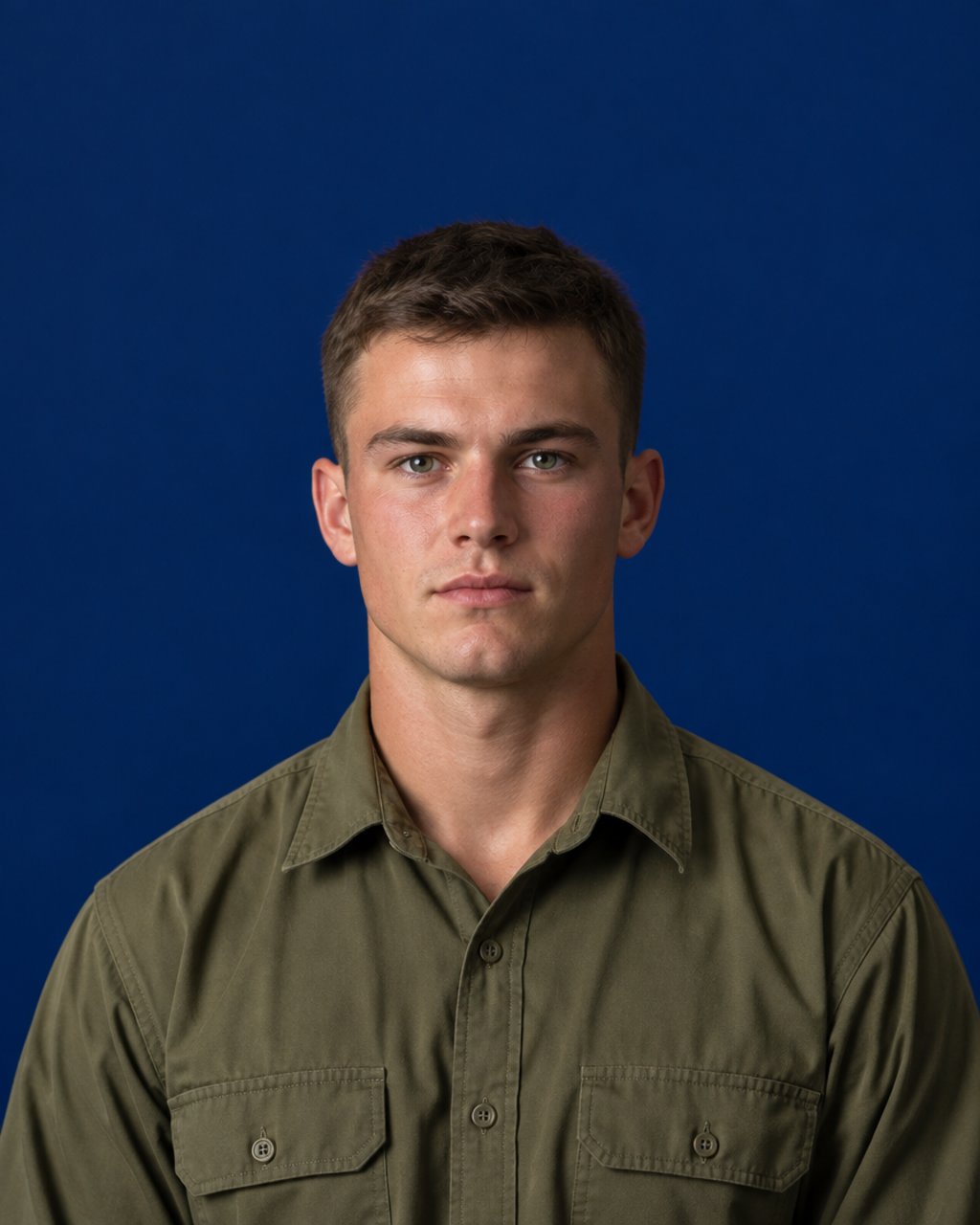
The New Zealand Defence Force does not have one vision standard. It has many, set by trade, and the gap between them is wide: the requirement for a pilot, an aircrew role or a diver is a long way from the requirement for most other trades. That makes 'will my eyesight be a problem?' a question only your Candidate Engagement Facilitator can answer properly, once they know the trade.
What NZDF publishes
Defence Careers states that a high level of both uncorrected and corrected vision is required, because some trades need to perform complex tasks in conditions of limited visibility, and that the ability to distinguish distant targets and signals matters for safety. Each trade has its own minimum visual requirements. Applicants must also demonstrate a certain level of correct colour perception, because many trades depend on interpreting signals and navigation markings accurately.
On refractive surgery, the published guidance is specific and worth reading before you book anything: applicants considering corrective photorefractive surgery are told to consult their doctor and their Candidate Engagement Facilitator beforehand, because some vision correcting procedures are not compatible with NZDF medical standards. People do have surgery and then discover it has closed a door. Ask first.
Standards change. Check the current Defence Careers medical information and talk to a Candidate Engagement Facilitator about your specific trade.
The part we will not soften
Night lenses temporarily reshape the cornea. That means the vision measured on you during the day is, technically, unaided — but it is unaided because of a lens you wore last night, and it fades if you stop wearing them. Any recruiting body's vision standard exists to describe your eyes, not your lens schedule.
So our position is simple and we do not negotiate on it. If you wear night lenses, you declare them — to the examiner, on the form, and to the recruiter. We will write it on any report we complete. Whether the standard is then met is the recruiting body's decision to make with full information, not something to be arrived at by omission. Being found out later, after training has started, is a far worse outcome than being told no at the start.
We will fit night lenses for someone applying to any of these services, and we think they are an excellent option for the job itself. We will not fit them as a way of getting a measurement past an assessor.
Where night lenses fit
Night lenses — orthokeratology — correct short-sightedness overnight so you go through the day with nothing in your eyes. For field conditions the case is obvious: no glasses to fog, break or be lost, nothing in the eye to dry out in wind and dust, nothing to handle with dirty hands, no lens case to keep sterile in the field, and full peripheral vision under a helmet.
But note the point above about unaided vision, and note that they are a temporary, reversible reshaping rather than a permanent change. Aviation medicine in particular treats orthokeratology differently from other corrections — civil aviation in New Zealand does not accept it at all (see our page on CAA and night lenses) — so if a flying or aircrew trade is your goal, ask before you fit anything.
Practical advice for applicants
- Find out your trade's standard before anything else. It is the only number that matters, and only NZDF can give it to you.
- Do not have refractive surgery until you have asked your Candidate Engagement Facilitator in writing. This is the single most common expensive mistake.
- Get colour vision tested properly before you set your heart on a trade that depends on it. It cannot be corrected.
- Know your unaided numbers, both eyes separately, not just your prescription.
- Declare any specialty lens wear, including night lenses, at the medical.
What we would do first
Book a comprehensive eye examination and say at the booking what you are applying for. We will measure your unaided and corrected acuity properly, test colour vision with the 24-plate Ishihara and follow up with Farnsworth D15 where needed, screen your visual fields, and tell you plainly whether you currently meet the published standard, whether you could with a change of correction, and whether you could not. Knowing that before you start an application is worth a great deal more than finding out during it.
A comprehensive examination is $129 for adults and takes 45 minutes for new patients, including full pretest and imaging. Visual fields, where they are needed, are $69.
Related: joining the New Zealand Police, pilots and CAA, orthokeratology.
Optometrists for vision standards and specialty lens fitting at Rose Optometry
You will be seen by one of seven therapeutically qualified optometrists — all University of Auckland graduates, all able to prescribe eye medication where it is needed, and all of whom examine patients from six weeks of age. Vision standards and specialty lens fitting is part of their clinical practice.
- Jagrut Lallu — Partner Optometrist · BOptom (Hons), MSc Specialty Lenses (Hons), FIAOMC
- Jacqueline Rowe — Partner Optometrist · BSc, BOptom
- Emilie Lawson — BOptom (Hons) · Accredited Glaucoma Prescriber · ACO Certificate in Advanced Contact Lenses
- Jason Shen — BOptom (Hons)
- Jessica Wood — BOptom (Hons) · Clinical Research Optometrist, New Zealand Eye Research Centre
- Stella Wong — BOptom (Hons)
- Anjali Hira — BOptom (Hons)
Book an assessment
Tell us at the booking which service you are applying for so we set aside the right amount of time.
- New patient — book a comprehensive eye examination (45 minutes, includes imaging and full pretest), $129 for adults, $79 for children and school students.
- Already a Rose patient — book your eye examination here.
- Want to talk about night lenses first? — book a free 15-minute Ortho-K chat, no cost and no obligation.
- Ready to be fitted — new ortho-k / night lens fit (30 minutes).
Or call 07 847 3195, or get in touch. Rose Optometry, 38 Lake Road, Frankton, Hamilton. 07 847 3195
Reviewed by Jagrut Lallu — BOptom (Hons), MSc Specialty Lenses (Hons), FIAOMC, Therapeutic Optometrist & Contact Lens Specialist, Partner, Rose Optometry. Last reviewed 19 September 2026.
Recent articles
See things the Rose way
Make an appointment at Hamilton’s leading eye care specialists.

