Pilots, CAA Vision Standards & Why Night Lenses Are Not Accepted
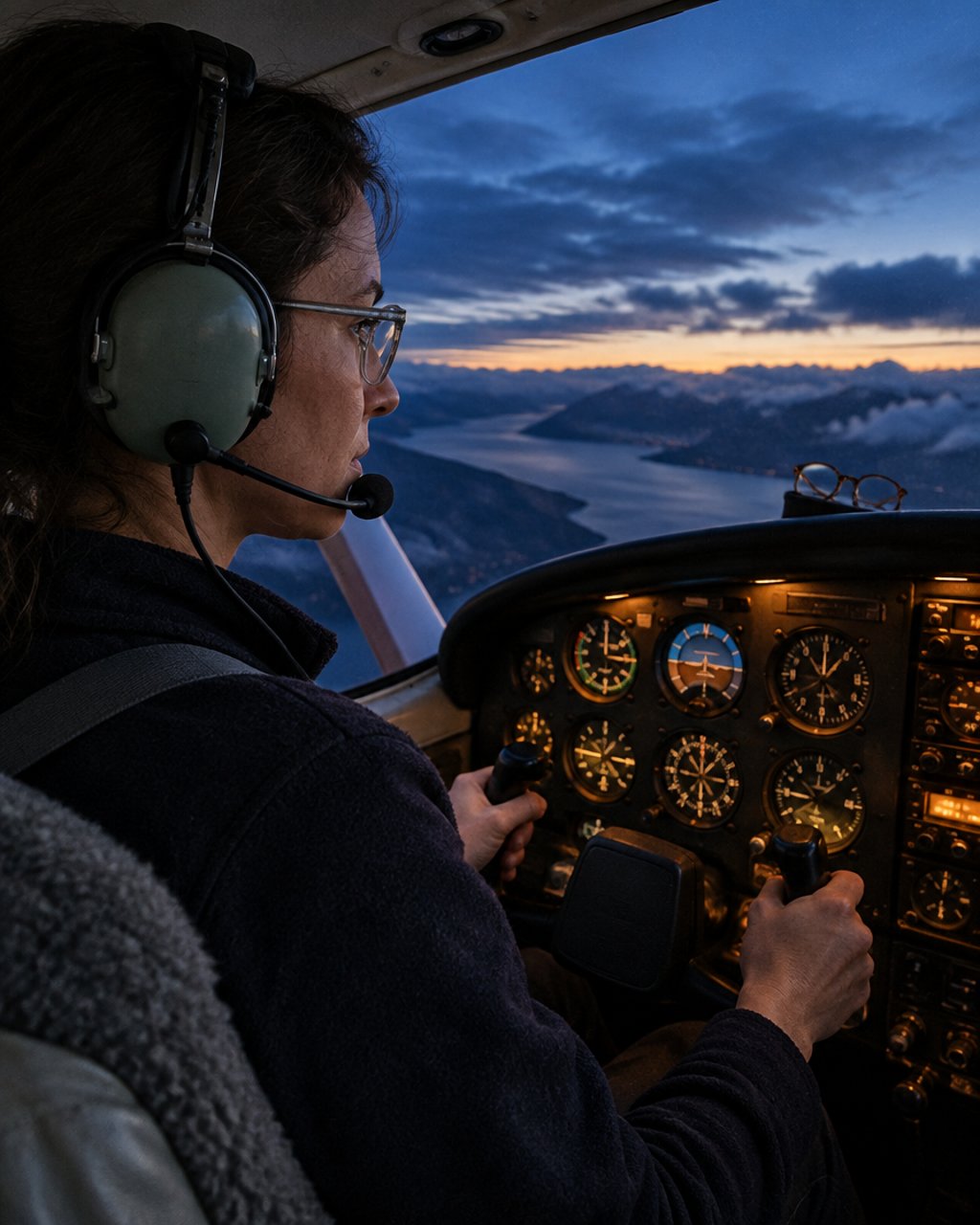
We fit night lenses, and we think they are one of the best options available for most people who are short-sighted. This page exists to say that if you hold or want a New Zealand pilot medical certificate, they are not one of your options — and that we will not fit them to you for that purpose.
We would rather lose the fitting than have a pilot find this out at a medical.
What CAA New Zealand says
The CAA medical manual addresses visual aids directly. On orthokeratology its position is unambiguous: the use of orthokeratology lenses is not acceptable and should be considered as being of aeromedical significance. An applicant using them would be considered under the flexibility process, and is unlikely to be issued a medical certificate unless they revert to another accepted form of correction.
The reasoning is sound, and it is worth understanding rather than resenting. The correction is temporary and regresses when the lenses are not worn, there is no reliable way to verify that the standard is met across a non-wear period, adaptation takes weeks and can involve ghosting and reduced contrast, and there are corneal oxygenation considerations with overnight wear. Cockpit vision has to be predictable on the day, at altitude, at night, and at the end of a long duty period. A correction that quietly fades does not meet that bar. New Zealand takes a stricter line here than some overseas regulators, so advice you read from another country may not apply.
What is accepted
- Spectacles — and CAA policy requires certificate holders to have a spare pair readily available. Carry them.
- Contact lenses, if well tolerated. Under ICAO standards they must be non-tinted, and multifocal contact lenses are not permitted. Allow a proper adaptation period before a medical, and expect dry cabin air to be the limiting factor on long sectors.
- Monovision is not acceptable — not as a contact lens arrangement, and not as a result of refractive surgery that deliberately leaves one eye myopic. This catches out pilots in their late forties who are offered monovision as a presbyopia solution. Say you fly before you agree to it.
- Refractive surgery is assessed on its own terms with stand-down periods and reporting requirements. Discuss it with your medical examiner before you book it, not after.
Standards are reviewed, so check the current CAA medical manual and talk to your Medical Examiner. This page is an explanation, not a certificate.
What we would do for you instead
Plenty. A carefully refracted pair of spectacles plus a spare, made with a proper anti-reflection coating, which is the one optical upgrade that genuinely helps with night and instrument glare. Contact lenses fitted and assessed for tolerance in dry air, with a realistic conversation about how they behave at the end of a long day. An honest assessment of whether your night vision complaint is astigmatism, an unstable tear film, or an early cataract — the three usual causes, and all manageable. And for a pilot approaching presbyopia, a proper discussion of lens options that do not involve monovision.
If you already wear night lenses and now want to fly, come and see us. Ceasing wear allows the cornea to return to its own shape over days to a few weeks, and we can map that with topography and confirm when your measurements are stable and representative.
What we would do first
Book a comprehensive eye examination and say at the booking what you are applying for. We will measure your unaided and corrected acuity properly, test colour vision with the 24-plate Ishihara and follow up with Farnsworth D15 where needed, screen your visual fields, and tell you plainly whether you currently meet the published standard, whether you could with a change of correction, and whether you could not. Knowing that before you start an application is worth a great deal more than finding out during it.
A comprehensive examination is $129 for adults and takes 45 minutes for new patients, including full pretest and imaging. Visual fields, where they are needed, are $69.
Related: the Defence Force, orthokeratology, in full, night driving and glare.
Optometrists for vision standards and specialty lens fitting at Rose Optometry
You will be seen by one of seven therapeutically qualified optometrists — all University of Auckland graduates, all able to prescribe eye medication where it is needed, and all of whom examine patients from six weeks of age. Vision standards and specialty lens fitting is part of their clinical practice.
- Jagrut Lallu — Partner Optometrist · BOptom (Hons), MSc Specialty Lenses (Hons), FIAOMC
- Jacqueline Rowe — Partner Optometrist · BSc, BOptom
- Emilie Lawson — BOptom (Hons) · Accredited Glaucoma Prescriber · ACO Certificate in Advanced Contact Lenses
- Jason Shen — BOptom (Hons)
- Jessica Wood — BOptom (Hons) · Clinical Research Optometrist, New Zealand Eye Research Centre
- Stella Wong — BOptom (Hons)
- Anjali Hira — BOptom (Hons)
Book an assessment
Tell us at the booking which service you are applying for so we set aside the right amount of time.
- New patient — book a comprehensive eye examination (45 minutes, includes imaging and full pretest), $129 for adults, $79 for children and school students.
- Already a Rose patient — book your eye examination here.
- Want to talk about night lenses first? — book a free 15-minute Ortho-K chat, no cost and no obligation.
- Ready to be fitted — new ortho-k / night lens fit (30 minutes).
Or call 07 847 3195, or get in touch. Rose Optometry, 38 Lake Road, Frankton, Hamilton. 07 847 3195
Reviewed by Jagrut Lallu — BOptom (Hons), MSc Specialty Lenses (Hons), FIAOMC, Therapeutic Optometrist & Contact Lens Specialist, Partner, Rose Optometry. Last reviewed 19 September 2026.
Recent articles
See things the Rose way
Make an appointment at Hamilton’s leading eye care specialists.

